
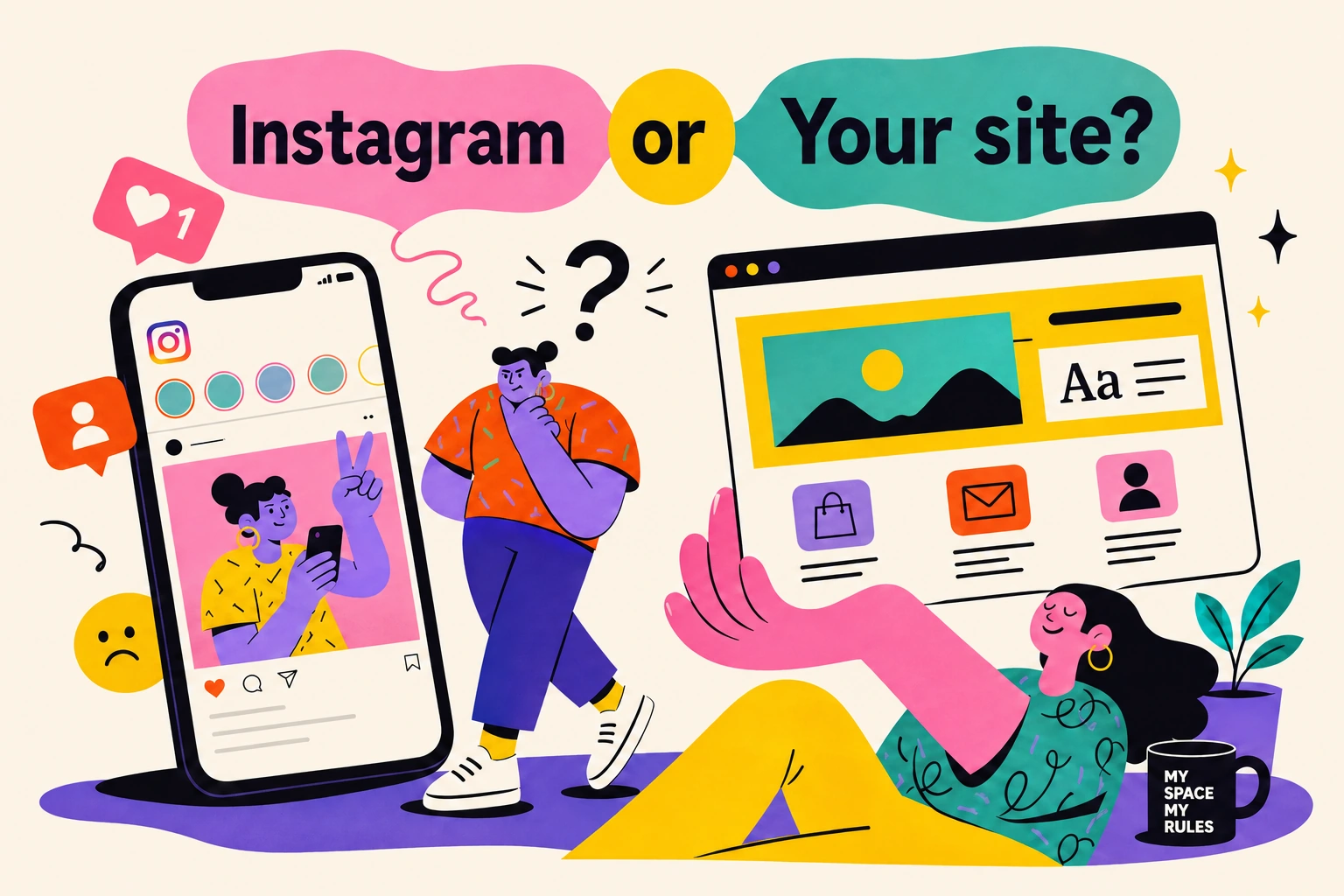
“Do I need a website if I have Instagram?” is a legitimate question when your profile already receives messages, showcases your work and even helps close business. Instagram can work very well. The difference is between something that works today and a digital presence capable of sustaining the business when circumstances change.
It is worth starting with a simple question: if the account became unavailable tomorrow, where would someone find your offer, understand your work and get in touch? The answer shows whether you have a foundation of your own or just a single point of presence.
The goal here is not to pit a website against Instagram. It is to understand each one's role, decide what structure makes sense now and make both channels work together.
Instagram is excellent for presence, but should not carry everything alone
Instagram connects people. It shows routines, experience, behind the scenes, answers and signs that there is a real person behind the service. For many people, it is the first doorway to a conversation.
But the platform also controls how content is distributed, displayed and found. The audience follows an account inside an environment owned by the platform. When a business concentrates all its explanations, all its client service and its entire relationship history there, it creates a dependency that is difficult to notice while everything is going well.
Reach is not the same as a foundation of your own
A piece of content can circulate widely one week and barely be seen the next. That does not diminish Instagram's value. It simply shows why it does not need to be the only place where the offer is explained, contact is organized and the next action is clear.
A page of your own does not eliminate the risks of a social network. It creates an address the brand controls to gather important information and continue the conversation outside the feed.
What a website of your own does that a social profile was not designed to do
Explain the offer without competing with the feed for attention
For more complex services, a short bio and a few highlights can rarely answer the questions that arise before hiring. Visitors want to understand who the service is for, what problem it solves, how the process works, what they can expect and how to take the next step.
A page lets you organize this conversation in a sequence. First the problem. Then the proposal. Next the process, common questions and an invitation to get in touch. This reduces the need for people to piece the puzzle together themselves.
Appear when someone is already searching
Social networks are very good for discovery and relationships. A website also makes room for pages and articles answering questions people search for on Google. There is no guarantee of ranking, but there is a structure of your own for building a body of knowledge, clarifying intentions and being found over time.
Measure the journey without guessing
On a page of your own, you can configure actions that matter to the business, such as opening WhatsApp, requesting a proposal, submitting a form or initiating a call. Google Ads documents the measurement of these conversions so that campaign analysis is not limited to likes or isolated clicks.
Measurement does not create sales by itself. It helps reveal where there is interest and where the journey needs improvement.
A website and Instagram do not compete
The most useful arrangement usually divides their roles. Instagram attracts attention, keeps the brand present and starts conversations. The website welcomes people who want to understand more, organizes the proposition and offers a next step without noise.
A post can introduce a question. The bio link can lead to a page exploring that question in depth. A campaign can lead to a specific offer. And the page can record the action the person took. This way, each channel does the work it performs best.
What kind of website makes sense now
Landing page
This is a page focused on a single action, such as requesting a quote, scheduling a conversation or exploring an offer. It makes sense when the business has a clear priority and needs a direct path for an interested person.
Corporate website
This is suitable when there is more than one service, a portfolio, frequently asked questions, a team or a brand story that needs organizing. It provides space for a fuller explanation and can grow with new pages and articles.
Online store
This makes sense when there is a catalog, payment processing and order fulfillment. For many service providers, however, it is not the first step. Starting with a page or corporate website may be more consistent with the business's current stage.
Three questions before starting
- What action does the website need to help generate?
- Which offer deserves to appear first?
- What question prevents someone from getting in touch today?
With these answers, the project stops being a collection of attractive pages and becomes a decision structure. Instagram remains important. The website provides an address, context and continuity for what started on the social network.
Frequently asked questions
Does a website replace Instagram?
No. Instagram helps with a frequent presence and conversation. A page of your own helps explain the offer and guide the next step.
Does a website guarantee appearing on Google?
No. It does not guarantee rankings or results. It creates a foundation for content, technical organization and measurement.
Can I start with a single page?
Yes. When there is a priority offer, a well structured landing page can be a clearer starting point than a large, unfocused website.
Supporting reading
Do your Instagram and website tell the same story?
Organize presence, offer and next step into a coherent structure.
Discuss my project